
P
PyMox
Off-grid energy assistant
Hero image placeholder
Multi-bus AC/DC • real simulations • climate-aware forecasting

Understand, plan, and control your off-grid energy.

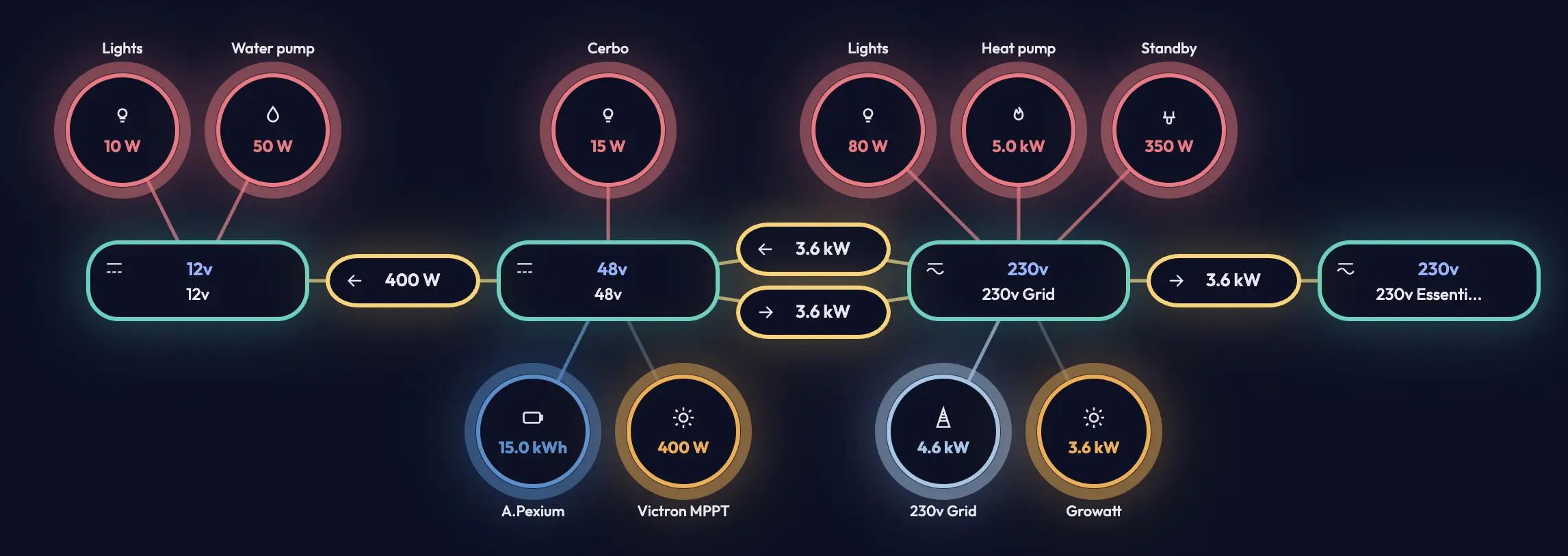
PyMox helps you model real electrical systems (12V/24V/48V + AC), run true simulations, and forecast solar and usage with climate and location in mind. See how energy moves through buses, converters, batteries, generators, and loads before you commit to a build.
Real topology
Buses & converters
Forecasting
Plan ahead
History
Learn & optimize
System flow preview
Live topology
System flow preview

Off-grid energy is complex. PyMox makes it clear.

Modern setups have multiple voltages, AC/DC buses, converters, and mixed generators. PyMox gives you a clear model and actionable insight.

Understand your system

A visual model of how energy is generated, converted, stored and consumed.

Prevent energy surprises

Forecast solar and consumption to know your runtime before you leave.

Improve over time

Daily history and trends highlight inefficiencies and upgrade impact.

Built for off-grid reality

Not a simplified calculator — PyMox models buses, converters, and device topology the way systems are built.

System modeling
  • Multiple DC/AC buses
  • Batteries, generators, loads
  • Converters between buses
Real simulations
  • Dispatch based on self-consumption
  • Grid import/export modeled
  • Self-sufficiency insights
Weather-aware forecasting
  • Location-aware solar
  • Usage & runtime prediction
  • Seasonal planning
Device-level profiles
  • Heat pumps, AC, heaters
  • Occupancy & daylight curves
  • Appliance run patterns
Planning in context

Plan your energy around real-world conditions. PyMox combines location, weather, and device behavior to forecast solar production and consumption, then simulates grid exchange and battery behavior so you know your runtime before you commit to a trip or upgrade.

Model scenarios like adding a panel, changing battery size, shifting loads, or adjusting climate assumptions. Compare outcomes instantly and see which choices deliver the best margin for your use case.

  • Location-aware solar forecasts and daylight windows
  • Device-level schedules and bus-specific consumption
  • “What-if” simulations for upgrades and route changes
  • Grid import/export and self-sufficiency visibility
  • Climate-aware loads for cabins and tiny homes
Forecasting Planning in context

Why PyMox is different

Most tools stop at a one-time sizing calculator. PyMox stays useful day-to-day with forecasting, history, and topology-aware modeling.

Typical calculators
One-time
  • Single voltage assumptions
  • No bus topology
  • Limited what-if planning
  • No performance history
PyMox
Ongoing
  • Multiple DC & AC buses
  • Converters between buses
  • Forecasting + “what-if” simulations
  • Daily historical insights
  • Designed to expand into home battery

Real use cases

Designed for real setups — from weekend campers to advanced hybrid systems.

Campervan use case
Campers & vanlife

Dial in reliable off-grid power for fridges, heating, and work gear. PyMox helps you balance solar, alternator, and battery capacity so you can stay off-grid longer without surprises.

  • 12V/24V/48V hybrid planning
  • Runtime forecasts for trips and seasons
Boat and marine use case
Boats & marine

Manage complex AC/DC loads with confidence. Model shore power, alternators, and inverters to understand how power flows between banks and what it takes to stay comfortable at anchor.
  • Clear bus separation for onboard systems
  • Forecast charging windows and runtime
Tiny house use case
Tiny houses & cabins

Build a resilient energy plan for seasonal swings and backup needs. PyMox models storage, solar, and grid options so you can scale from weekend use to full-time living.

  • Backup runtime and load prioritization
  • Plan upgrades without overbuilding
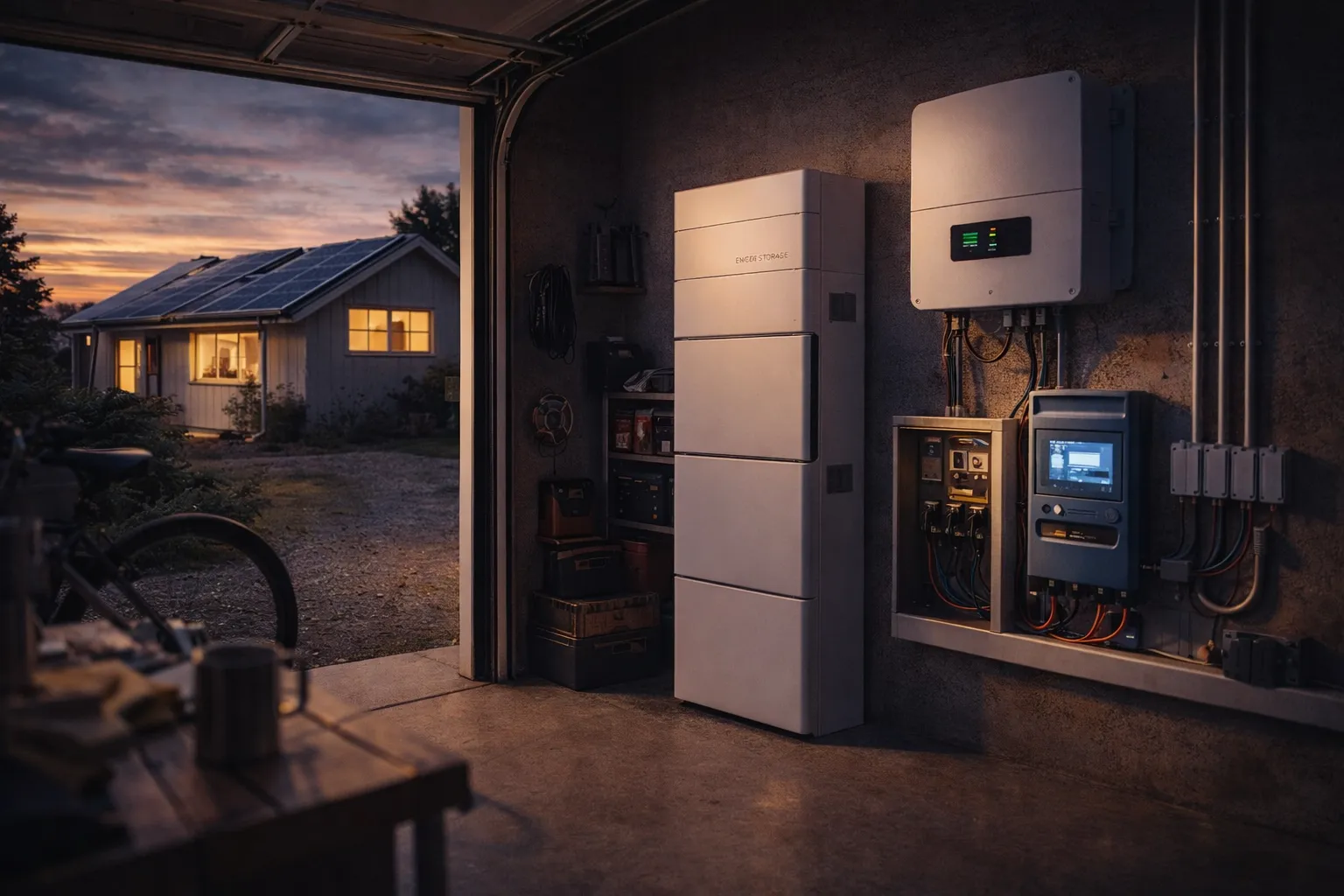
Tiny house and cabin use case
Home battery & solar owners

Take control of your home energy setup with a clear view of solar production, battery storage, and daily usage. PyMox helps you map every load, size your storage, and see how solar and backup sources cover real-world demand.

Compare daily and seasonal scenarios, decide when to add panels or batteries, and understand the tradeoffs between grid-tie, generator support, and full independence. You can also model upgrades over time to avoid overspending while keeping comfort consistent.

  • Load profiling for heating, water, and appliance spikes
  • Battery runtime estimates across seasons
  • Upgrade paths from weekend use to full-time living

Pricing

Start free, upgrade for forecasting and history, and scale with Business pricing per system.

Yearly billing saves ~20%
Free
€0
For exploring PyMox
Start
Get started
Includes
  • 1 system
  • Full system modeling (AC/DC buses)
  • Converters between buses
  • Batteries, generators and loads
  • Visual system diagram
  • Instant static calculations
  • Manual values only
Not included
  • Forecasting & planning
  • Historical logging
  • Scenarios / what-if
  • Exports
Recommended
Pro
€8
/month
Or €79 / year
Best value
Upgrade to Pro
Everything in Free, plus
  • 1 system with full Pro insight
  • Solar forecasting by location
  • Consumption planning
  • Battery runtime prediction
  • Historical daily logs (solar/usage/SOC)
  • What-if simulations (toggle loads, add panels)
  • Basic export (PDF summary)
  • Alerts (low solar, high usage)
Business
€25 /month base
+ €5 /system/month
For installers, consultants & fleet owners
Scale
Contact sales
Everything in Pro, plus
  • Multiple systems (pay per system)
  • Client/project organization
  • Templates and duplication
  • Scenario comparison (A/B setups)
  • Branded PDF exports
  • Shareable read-only client links
  • Advanced planning profiles (best/worst case)
  • Priority support
Example

Managing 6 systems: €25 base + 6 × €5 = €55/month

Tip: Keep Free and Pro limited to 1 system to keep pricing simple. Business scales with the number of systems you manage.
Read the FAQ →

FAQ

Is this a calculator or a system model?

A model. Devices attach to one bus, buses connect via converters, and (optionally) a single bus can connect to the grid.

Does it support multiple voltages?

Yes. Design around 12V/24V/48V plus AC buses and define converters between them.

Take control of your energy system
Stop guessing. Model your setup, forecast your energy, and improve with history.